An online wedding ceremony needs a script that feels personal without sounding like a video call agenda. The officiant still has the same job: welcome everyone, acknowledge the couple, guide the ceremony, and create a clear moment when two people become married.
The screen changes the setting. It does not change the meaning.
For an online wedding ceremony, the officiant should speak with a little more clarity than usual. Guests might be joining from different rooms, cities, or time zones. Some might watch through a laptop while others follow on a phone. Short pauses, direct instructions, and a warm speaking style help everyone stay connected to what is happening.
What Should an Officiant Say at an Online Wedding?
The officiant should cover the same core moments found in a traditional ceremony, while adjusting the wording for a virtual setting.
A practical online wedding ceremony script usually includes:
- A welcome to the couple and guests
- A brief acknowledgment of the virtual setting
- Opening remarks about marriage
- Recognition of family members and loved ones
- A statement of the couple’s commitment
- Readings, poems, or personal messages
- The couple’s vows
- Exchange of rings
- Declaration of marriage
- A first kiss
- Closing remarks and instructions for guests
The order does not need to feel rigid. If the couple has a family tradition, religious reading, cultural element, or personal story they want included, the officiant should work it into the ceremony naturally.
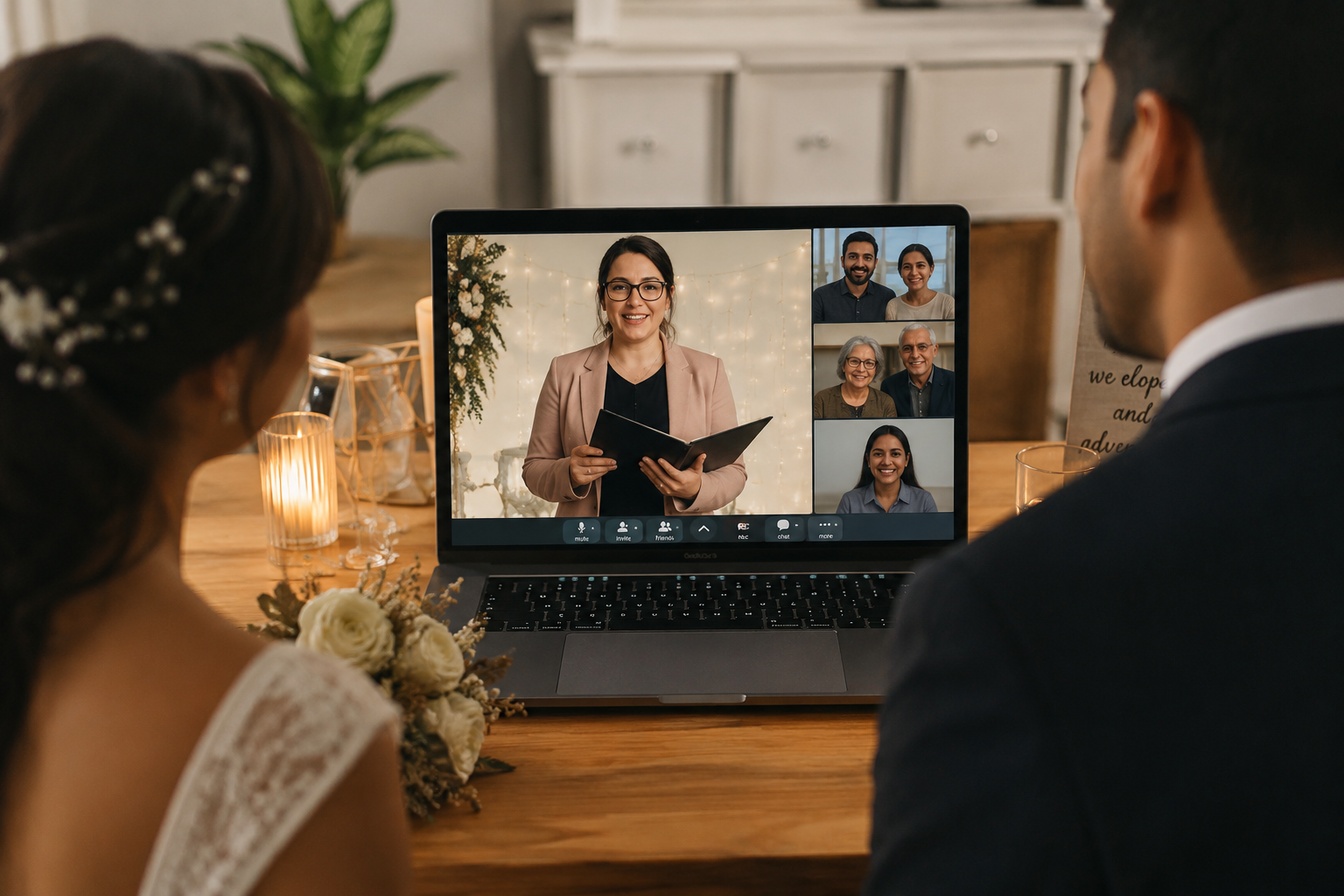
Opening the Ceremony
The first few minutes matter. Guests need to know the ceremony has started, and the couple deserves an opening that feels meaningful rather than technical.
The officiant might begin with:
“Welcome, everyone. Whether you are joining us from the same room or from hundreds of miles away, your presence matters today. We are here to celebrate the marriage of [Name] and [Name], two people who have chosen to build their life together.”
For an online wedding ceremony, this type of opening acknowledges the screen without making the technology the focus.
The officiant might then add:
“Although we are not all gathered in one physical place, we are sharing this moment. Every person joining us has a place in the story of this couple, and we are grateful that you are here.”
Keep this section short. Guests did not join the call to hear a speech about video conferencing.
Acknowledging the Virtual Setting
A virtual ceremony deserves one direct reference to its format. After that, move on.
The officiant might say:
“Today looks different from the wedding many people grew up imagining. There is no single room filled with every person we love. Instead, this screen brings those people together from different places, and that makes today’s gathering meaningful in its own way.”
That works especially well when parents, grandparents, siblings, or friends are attending from other states or countries.
For an online wedding ceremony, the officiant should avoid repeatedly mentioning glitches, microphones, cameras, or internet connections unless something needs immediate attention.
A simple technical reminder is enough:
“Before we begin, please keep your microphone muted unless you are invited to speak. We will have a moment later for everyone to offer their congratulations.”
Then leave the technology behind.
Speaking About the Couple
This is where the ceremony starts feeling personal.
The officiant should share a short story about the couple, explain what brought them together, or describe qualities that make their relationship distinctive.
For example:
“[Name] and [Name] did not arrive on this day with a perfect plan. They arrived with curiosity, patience, laughter, and a willingness to keep choosing each other. Their relationship has grown through ordinary days, difficult conversations, shared plans, and countless small moments that eventually became a life together.”
Specific details are stronger than generic statements.
If they met through friends, mention it. If their first date involved a terrible restaurant, include that story. If one person knew early on that this relationship was different, let guests hear it.
An online wedding ceremony does not need a long biography. Two or three meaningful details often say more than ten minutes of background.
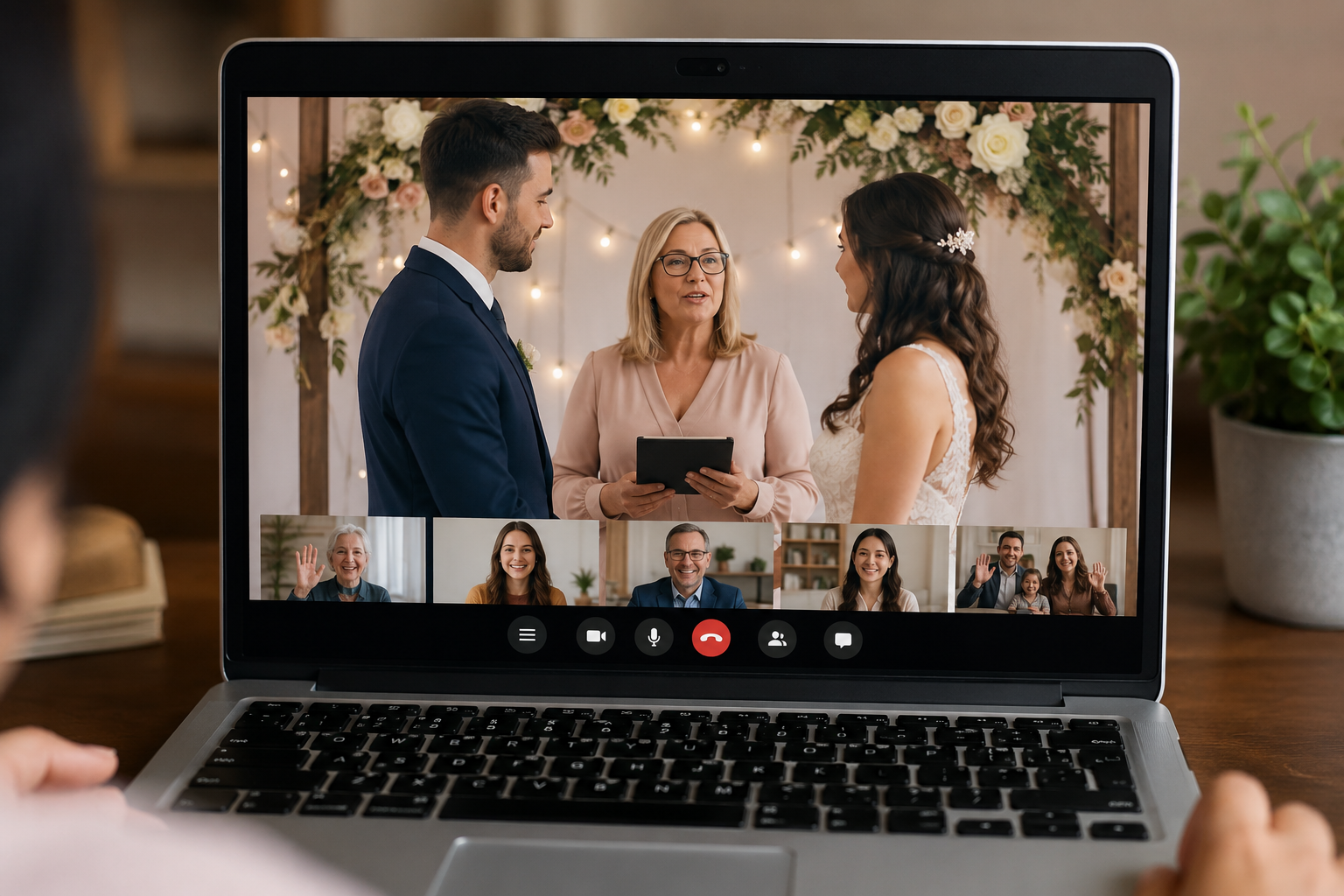
Inviting Reflections on Marriage
The officiant should then shift from the couple’s story to the meaning of marriage.
Avoid turning this section into a lecture. A few thoughtful lines are enough.
“Marriage is not one promise made once. It is a collection of promises kept through ordinary days. It is listening when the answer is difficult, showing up when life becomes demanding, and finding reasons to laugh when plans do not work out.”
Another option:
“A lasting marriage is built on small decisions. You choose honesty. You choose patience. You choose to speak instead of withdrawing. You choose each other again and again.”
This section gives the online wedding ceremony emotional weight without making the script sound overly formal.
Recognizing Family and Friends
Virtual weddings often include people who would not otherwise be able to attend. The officiant should acknowledge them.
Try something like:
“We also want to recognize the family and friends who have supported [Name] and [Name]. Some of you have known them since childhood. Others entered their lives more recently. Each of you has helped shape the people standing here today.”
If someone important is unable to attend, the couple might want the officiant to mention them by name.
This is also a good place to recognize parents or grandparents.
“To the families of [Name] and [Name], thank you for the love, lessons, patience, and support that helped bring these two people to this moment.”
Inviting the Couple to Exchange Vows
The transition to vows should be clear.
“And now we come to the promises at the heart of today’s ceremony. [Name] and [Name], please turn toward each other.”
For an online wedding ceremony, the couple should know exactly when to speak. The officiant should introduce each person separately and leave enough silence for them to finish.
“[Name], please share the vows you have prepared for [Name].”
After the first person finishes:
“[Name], please share your vows.”
If the couple wants traditional vows, the officiant might lead them line by line.
“I, [Name], take you, [Name], to be my spouse.”
“I promise to stand beside you, to respect you, to listen to you, and to love you through every season of our life together.”
Personal vows often feel better when they sound like normal speech. There is no requirement for perfect poetry.
Ring Exchange
The ring exchange should receive its own introduction.
“These rings are a visible reminder of the promises you are making today. They represent a commitment that will continue long after this ceremony ends.”
Then:
“[Name], please place the ring on [Name]’s finger and repeat after me.”
A short ring vow works well:
“I give you this ring as a sign of my love and commitment. I choose you today, tomorrow, and every day we share.”
Repeat for the other partner.
In an online wedding ceremony, the officiant should pause after each sentence instead of rushing through the ring exchange. The camera gives guests a close view of the moment, so there is no need to hurry.
Declaration of Marriage
This is the point everyone has been waiting for.
The officiant might say:
“[Name] and [Name], you have spoken your vows and exchanged rings in the presence of the people who matter most to you. You have made your promises freely and with love.”
Then:
“By the authority entrusted to me, I now pronounce you married.”
If the couple’s jurisdiction requires specific legal wording, the officiant should use the wording required by the applicable marriage laws rather than relying solely on a generic script.
Then comes the familiar line:
“You may kiss.”
Let the moment breathe.
Do not immediately begin speaking over the couple while they kiss or celebrate. A few seconds of silence often feels more natural than another scripted sentence.
Closing the Ceremony
The final words should bring the attention back to the guests.
“Friends and family, thank you for being part of this day. Your presence, whether from the next room or another part of the world, has helped make this celebration complete.”
Then:
“Please join me in congratulating [Name] and [Name] as they begin this next chapter as a married couple.”
For an online wedding ceremony, the officiant might also explain what happens next:
“We will now move into the celebration portion of the event. Please stay with us for photos, a toast, and a chance to share your congratulations with the newlyweds.”
If guests are invited to speak, give them clear instructions.
A Complete Short Script Example
Some couples want a ready-to-read version rather than a collection of individual sections. This condensed online wedding ceremony script gives the officiant a useful starting point:
“Welcome, everyone. Thank you for joining us today to celebrate [Name] and [Name]. Although we are gathered through screens rather than in one physical room, every person here has been invited because you hold a meaningful place in their lives.
[Name] and [Name], today you are making a public promise to continue building your life together with honesty, patience, respect, and love.
We now invite you to share your vows.
[Name], please share your vows.
[Name], please share your vows.
These rings represent the promises you have made today. Please exchange them now.
[Name], repeat after me: I give you this ring as a sign of my love and commitment.
[Name], repeat after me: I give you this ring as a sign of my love and commitment.
You have shared your vows and exchanged rings in the presence of your loved ones. By the authority entrusted to me, I now pronounce you married.
You may kiss.
Everyone joining us today, please celebrate with us as we congratulate [Name] and [Name] on their marriage. May your life together be filled with patience, laughter, honest conversations, shared plans, and many ordinary days worth remembering.”
How to Make the Script Sound Natural
The best online wedding ceremony script should sound like the officiant is talking to real people, not reading instructions from a manual.
Keep these points in mind:
- Use the couple’s names often enough to keep the ceremony personal.
- Replace generic stories with details from their relationship.
- Keep long readings limited unless the couple specifically requests them.
- Write vows in language the couple would use themselves.
- Add pauses after emotional statements.
- Explain transitions so the couple knows what happens next.
- Keep technical instructions short.
- Read the complete script aloud before the ceremony.
- Check the pronunciation of every name.
- Confirm who speaks first during vows and ring exchange.
- Leave room for laughter, tears, and unexpected moments.
An online wedding ceremony also benefits from a rehearsal. The officiant, couple, and technical host should test microphones, camera angles, screen sharing, music, and guest participation before the actual event.
The script should guide the ceremony, not control every second of it.
Final Touches for the Officiant
The strongest online wedding ceremony scripts leave enough room for personality. The officiant should know the structure well enough to look at the couple while speaking instead of staring at the screen or reading every sentence mechanically.
A few personal lines often stay with guests longer than an elaborate speech:
“Today is not about having a perfect ceremony. It is about making a sincere promise.”
Or:
“The people watching from different places are still part of the same celebration.”
Or simply:
“You chose each other. Today, you said it out loud.”
That is enough.
An online wedding ceremony still needs warmth, structure, and a clear sense of occasion. The screen is only the setting. The words, promises, and people involved are what make the ceremony feel like a wedding.